Europe faces a 4.8M healthcare worker shortage by 2030, while 1 in 5 Europeans will be over 65 by 2050. Can assistive robots, AI avatars, and tele-rehabilitation actually help — and will care workers accept them?
Sara Canella carried out a qualitative research study over several months. The cases include the Pepper robot in a Slovenian hospital, digital neurorehabilitation technologies at San Camillo Hospital, the RoBee robot in Rome, and socially assistive robots and AI-based avatars in Japanese dementia and ageing programmes.
The most surprising finding: acceptance wasn’t about how advanced the tech was. It was about whether staff helped design it, whether it fit existing workflows (not added a parallel one), and whether everyone understood exactly what the machine decides — and what stays human.
One quote captures it best: “Robots were tolerated — and often appreciated — precisely because they remained recognisably non-human: tools, not companions.”
These aren’t just healthcare lessons. They’re a blueprint for Industry 5.0 adoption in any sector — and they directly inform how NSBproject supports organisations through technology readiness and adoption assessment (our SRL + ARL framework): co-design from day one, integration over addition, role clarity, and peer-to-peer learning over top-down training.
Curious how this applies to your industry?
📖 Full research: Canella, S. — The Use of Digital Technologies, Artificial Intelligence and Social Robots in Healthcare: Human-Machine Interaction analysis, Università Ca’ Foscari Venezia. Available at: https://unitesi.unive.it/handle/20.500.14247/28077
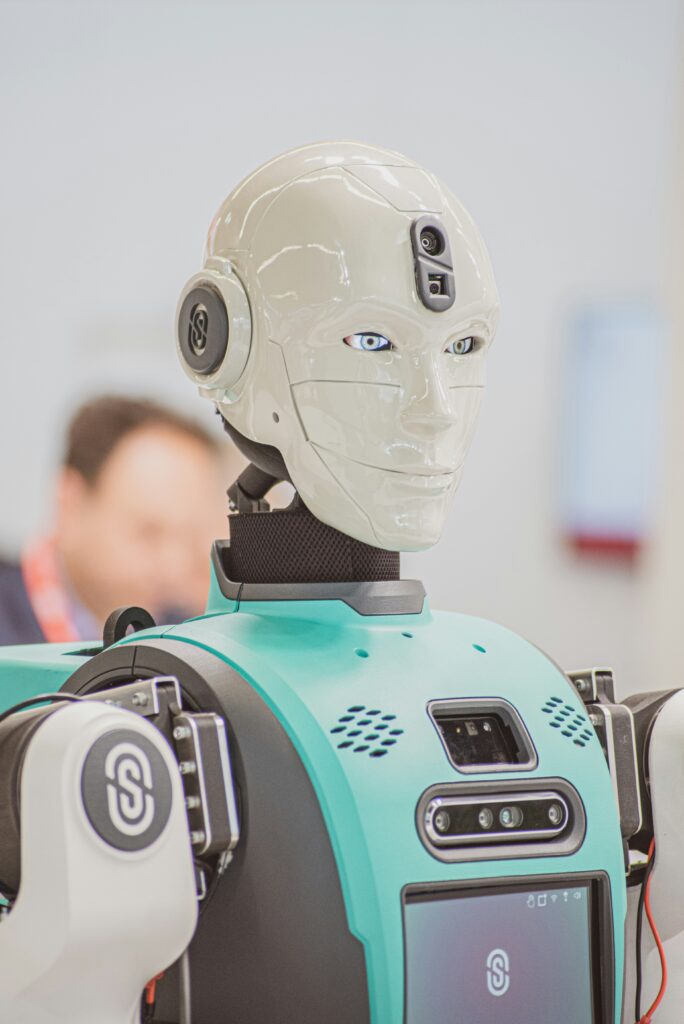
🎨 Photo by Sven Mieke – Unsplash
#Industry5 #TechnologyAcceptance #Healthcare #Robotics #AI #FutureOfWork
Some key outcomes available here